If you’re able, please donate. The creator of this particular fundraiser works for Bet Tzedek Legal Services, which is a Jewish organisation devoted to fighting economic justice. She writes that you can also send money directly to:
Tree of Life – Or L’Simcha Congregation
5898 Wilkins Ave
Pittsburgh, PA 15217
*It’s customary in Judaism to make donations in multiples of 18 as to bless the recipient(s) with good health and long life (the numerical value of the Hebrew word “chai” which means “life”), but by all means, just give what you can.
Here’s a link for anyone who doesn’t want to give money through Facebook. It’s been passed around some Sikh Facebook groups and several people from my community have been able to donate through it.
Well, given that Bardock’s story ends the same regardless of which version, I’d have to say I liked his Minus depiction more. The Special was cool as a kid and all, but looking at it now, it made Goku’s fight with Freeza seem far too fated, and just the whole “you can see the future because I touched ya” thing was super convenient.
Plus it actually makes him seemingly start to care about “Kakarot” seem a lot less out of left field.
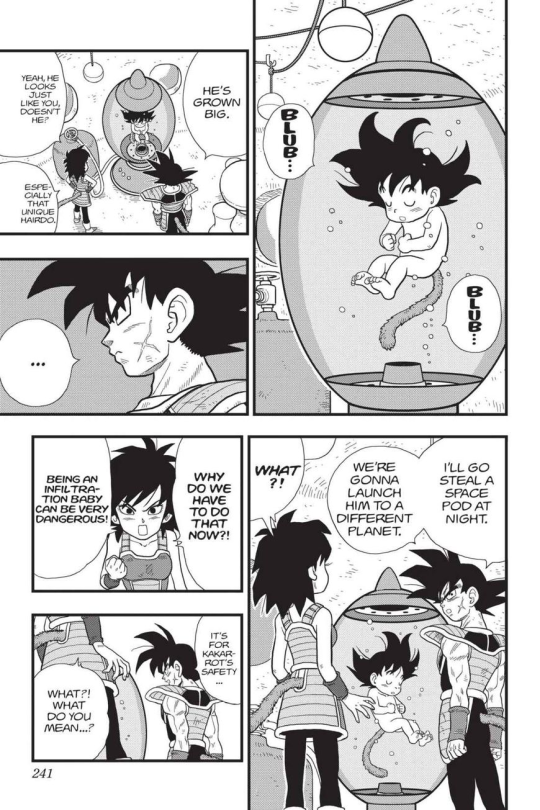
Plus it gave us Gine, who explains a lot about Gohan, AND a more plausible reason why specifically Raditz and Nappa were spared along with Vegeta; completely by accident and virtue of Freeza lacking the patience to make sure they all actually returned.
I disagree with this honestly. With Minus, Toriyama singlehandedly ruined goku’s character arc. It turned him from his own character to more of a Superman esque character. Minus tries to make bardock and goku special because of the power of love. His parents send him to earth so he will flourish, much like Superman.
In the original rendition Bardok doesn’t care much for his family. He is a Saiyan warrior raised on the planet. He’s special, but not because of the power of love. He’s special because he exploits zenkai boosts to become an elite. His son, Goku, is sent to earth to destroy all life on it. He ends up getting amnesia and becomes the hero of the planet he was destined to destroy. He saves that world from his people and eventually is able to avenge his whole race from the tyrant that destroyed them in the first place. He does this by his own hard work and working together with others. He breaks his limits time and time again for his own unconscious selfish desire.
Minus sends him to earth to flurish and be their hero, the original has him become the hero on his own merits. Not because his parents loved him and were special for doing so. It just seems very convoluted that they’d take this type of character development away from a character who hasn’t really developed in over 20 years.
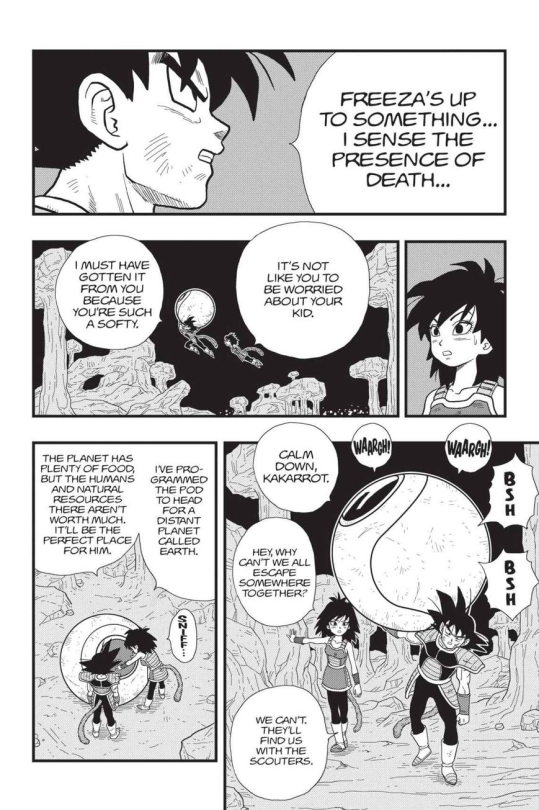
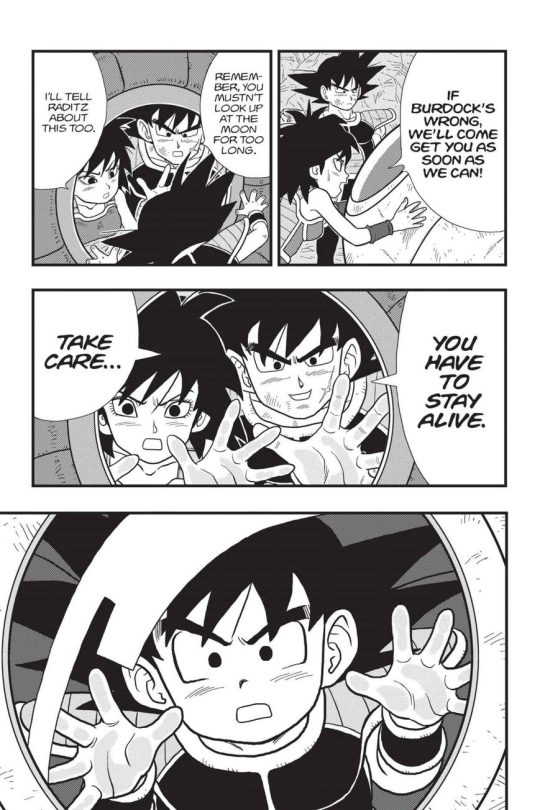
…Minus literally only sends him to Earth to hide him from Freeza.
That’s it. He’s sent there because it can presumably keep him alive. He’s never once sent there to be a hero. There’s no implication anyone’s “special” because of the “power of love”. Bardock is still very much a Saiyan, enjoying his exploits, and he’s still risen in rank despite his status.
Literally the only thing different is Bardock cares about his family and stuck with his mate beyond the reproductive process, which while unusual, is not “unique” or “special”.
Yeah know it’s funny, both had their ups and downs. I’m more for ruthless bardock from the special but I do enjoy his interactions with Gine n actually caring for his kid. But the manga also contradicts with what Raditz said to him when he first arrived.
I kinda wish there was a way to fuse the two.
It actually does not.
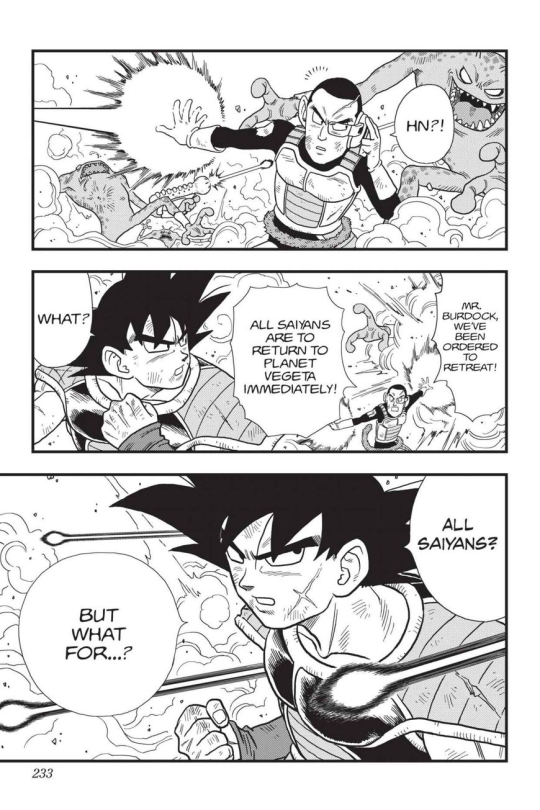
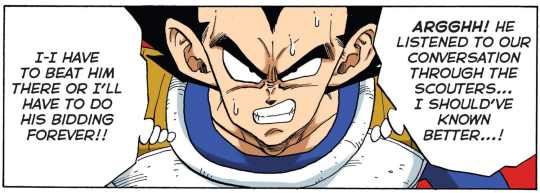
The Scouters, as you know, are a communication hub. People can listen in and overhear conversations on them. It’s part of how Freeza keeps his minions in line.
For Gine to inform Raditz of the real reason Goku was sent to Earth would be to essentially spill the beans to Freeza. So it would stand to reason that she either lied and told Raditz his brother had been sent as an infiltration baby, or that he was entered into the system as such to cover their tails and Raditz learned about it later. The only way she could have told him the truth would have been in person, and he never came back.
Which was why he lived and all.
I have one issue with Minus.
I always LIKED the depiction of Saiyans as a race as were presented to us in the Saiyan saga and especially what it told us about Goku as a character. He should’ve been a villain, he should’ve destroyed life on Earth, but he went another direction. The implications of what he could’ve been had he not hit his head are fascinating to think about.
When Minus came out later and told us he had loving parents, and no mission to destroy life on Earth, that really fell flat for me, not just for Goku’s character arc, but for the Dragon Ball story as a whole
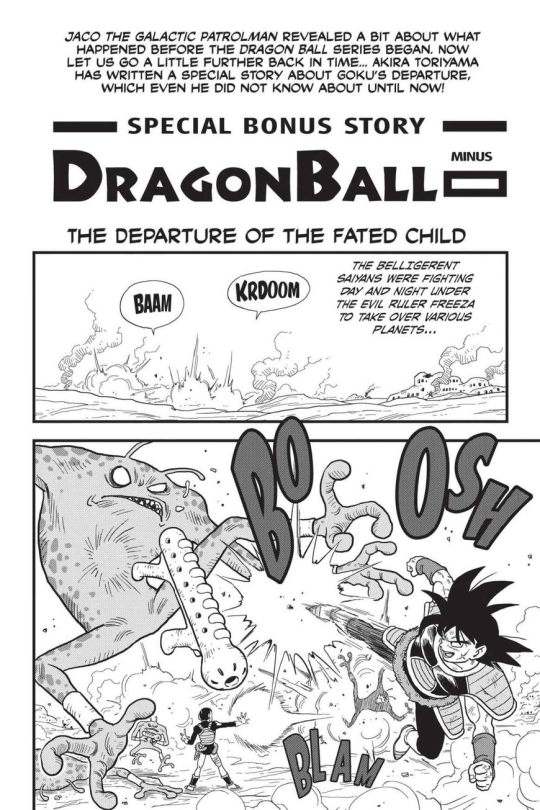
I think the issue that a lot of people have with Dragon Ball Minus is that they judge it as a standalone story, when it really isn’t. Minus was supposed to be a supplementary chapter to Jaco the Intergalactic Patrolman. You can’t just read Minus without reading Jaco, because there are certain things that just don’t make sense unless you have read Jaco.
Minus never said that Kakarot came to Earth as a hero. Minus never retconned anything that was already established in the Saiyan Saga.
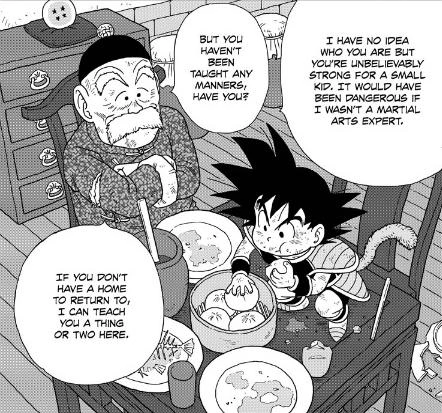
In Jaco the Intergalactic Patrolman, Jaco arrives to Earth precisely because there is an alien threat that is en-route to Earth, and his task is to destroy this alien before he matures. But typical with Jaco, he ends up missing the space pod as it lands on Earth, so naturally he assumes that it has missed its mark. The comic then cuts to a brief moment with Grandpa Gohan and Kakarot. And Grandpa Gohan implies that he was attacked by Kakarot and had to defend himself upon meeting him.
I’d argue it’s more in-character than Grandpa Gohan’s meeting in Bardock Father of Goku, since all Kakarot did in that was laugh and playfully kick him. Here he outright attacked Gohan.
Kakarot still arrived on Earth as an angry baby who would eventually hit his head. Just because Bardock and Gine sent him to Earth to keep him safe, doesn’t mean that Kakarot’s instincts as a Saiyan wouldn’t kick in. Minus doesn’t change any of that. If anything, the only thing it ever did was provide a different background of why Kakarot was sent to Earth.
Very much this.
Saiyans were, by and large, still feral beings who loved combat and bloodshed. They were still, by and large, unattached to their families, and placed all value in strength. Gine, and Bardock by extension, was an exception. It’s part of why she was deemed unfit for combat and reduced to menial labor. Choosing to mate with such a Saiyan, let alone form an emotional attachment, is part of why Bardock was still low-ranked despite his strength and skill in battle.
And, as seen above, little Goku was indeed still a savage, feral little thing until he whacked his head.
Nothing was really changed, being frank. All that it mandated is that the Special isn’t how things went down. But Saiyans, their traits, their society, were very much the same, and Bardock was still the only one to really stand up to Freeza and his betrayal.
Now it all comes down to one thing! What did Grandpa Gohan do with that Saiyan armor!?
I remember when I first got Harry Potter and the deathly hallows I picked the book up and it accidentally flicked to the last few pages and I quickly shut it because I didn’t want to spoil it for myself but I saw “Ginny kissed Albus” and I remember thinking “fucking plot twist”.
Like the Tibetan monks, Indian Yogis seem to have an unusual talent
for manipulating their physiological processes while in deep meditation.
After hearing stories of yogis spending 28 days underground and
surviving, in 1936, a French cardiologist named Therese Brosse
traveled to India to see if the yogis truly did have such talents. In
her experiments, the yogis reportedly slowed their heart down so slow
that it was only detectable via an EKG machine.
In the 1950s Brosse’s study was expanded by another group of
researchers who traveled through India with an eight-channel
electro-encephalograph and various other instruments, which they used to
monitor the yogis’ brain activity, respirations, skin temperature,
blood-volume changes, and skin conductance. Two of their test subjects
were placed in air-tight sealed boxes, on two separate occasions, and
were monitored for 8 to 10 hours. During that time the Yogis showed
biological characteristics similar to sleep and were able to slow down
their heart rate and respiration to low enough levels that oxygen and
carbon dioxide quantities inside the box remained virtually in the same
proportions as found in air at sea level. Thus, it was shown that by
slowing down their bodily processes and not panicking (as most would do)
the Yogis could survive a live-burial for far longer than the average
person, possibly even weeks longer. (Source)




 🔥 There is beauty in destruction🔥