Soo I just watched s21 again. Let me just say my comic things have zero continuity 🙃 the characterization kinda goes all over, and the same with their dynamic. I kinda thought about Kyle’s character arc and sort of worked it into how he’d react to his feelings (I headcannon him as being less in touch with them, so that’s why he’s more hesitant sometimes)
The Season Finale of South Park is TONIGHT! Go behind the scenes of last week’s “SUPER HARD PCness” with our Live Tweet before the Premiere of the Finale! TONIGHT @ 9:30p. Check out this sneak preview!
Shout out to mentally ill people who dropped out of school
– shout out to the kids who were “so bright” and ‘heading somewhere” and had to drop out because school was too much to handle along with mental illness
– shout out to the kids who struggled to get where they got before they dropped out
– shout out to the kids who tried and tried and tried and still couldn’t finish
you aren’t unintelligent because you dropped out of school, you aren’t a delinquent or a bad person because you dropped out of school, just because you did what you had to doesn’t make you a bad person
Meet the Irukandji Jellyfish (Carukia barnesi). This tiny little fellow is deadly; believed to be the most venomous creature in the world and they are only around 2.5cm big.
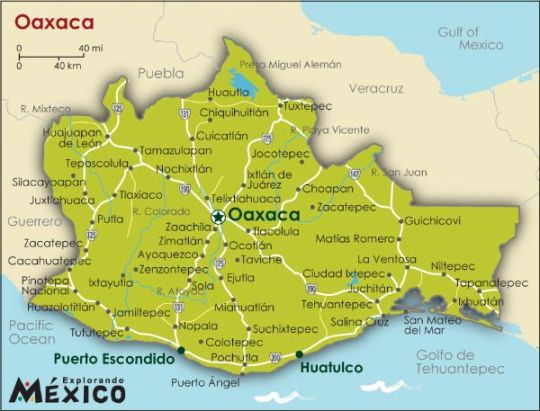
The Mexican state of Oaxaca, located along the Pacific Ocean in the southeastern section of the country, consists of 95,364 square kilometers and occupies 4.85% of the total surface area of the Mexican Republic. Located where the Eastern Sierra Madre and the Southern Sierra Madre come together, Oaxaca shares a common border with the states of Mexico, Veracruz and Puebla (on the north), Chiapas (on the east), and Guerrero (on the west).
The name Oaxaca was originally derived from the Náhuatl word, Huayacac, which roughly translated means The Place of the Seed in reference to a tree commonly found in Oaxaca. As the fifth largest state of Mexico, Oaxaca is characterized by extreme geographic fragmentation. With extensive mountain ranges throughout the state, Oaxaca has an average altitude of 1,500 meters (5,085 feet) above sea level, even though only about 9% of this is arable land. With such a large area and rough terrain, Oaxaca is divided into 571 municipios (almost one-quarter of the national total).
Oaxaca’s rugged topography has played a significant role in giving rise to its amazing cultural diversity. Because individual towns and tribal groups lived in isolation from each other for long periods of time, the subsequent seclusion allowed sixteen ethnolinguistic groups to maintain their individual languages, customs and ancestral traditions intact well into the colonial era and to some extent to the present day. For this reason, Oaxaca is by and large the most ethnically complex of Mexico’s thirty-one states. The Zapotec (347,000 people) and the Mixtec (241,000 people) are the two largest groups of Indians, but they make up only two parts of the big puzzle.
Even today, it is believed that at least half of the population of Oaxaca still speaks an indigenous dialect. Sixteen different indigenous groups have been formally registered as indigenous communities, all perfectly well defined through dialect, customs, food habits, rituals, cosmogony, etc. However, the historian María de Los Angeles Romero Frizzi suggests that “the linguistic categorization is somewhat misleading” partly because “the majority of indigenous peoples in Oaxaca identify more closely with their village or their community than with their ethnolinguistic group.”
In addition, Ms. Romero writes, some of the language families – including Zapotec, Mixtec, and Mazateco – “encompass a variety of regional languages, making for a more diverse picture than the number sixteen would suggest.” When the Spaniards arrived in the Valley of Oaxaca in 1521, the inhabitants had split into hundreds of independent village-states. By the time of the 1900 Mexican Federal Census, 471,439 individuals spoke indigenous languages, representing 49.70% of the state population and 17.24% of the national population.
Then in the unique 1921 census, 25,458 residents of Oaxaca claimed to be of ³pure indigenous² descent, equal to 3.96% of the state population. Another 328,724 persons were listed as ³indigenous mixed with white² (called mestizo or mezclada). And in the 1930 census, 56.4% of Oaxaca¹s population spoke indigenous languages.
By the time of the 1990 census, 1,018,106 persons aged five or more speaking indigenous languages made up 39.12% of the total state population and 19.3% of the national total of Indian-language speakers. This, however, did not count another 190,715 children aged 0 to 4 years of age, living with indigenous speakers. And an additional 383,199 Oaxaca residents were classified as having an indigenous identity (but not speaking an Amerindian language). Once you had added up all these figures, you will find that 1,592,020 persons of indigenous identity lived in the state, representing 52.72% of the total state population and 18.27% of the total indigenous population of the Mexican Republic.
Even in the 2000 census, 1,120,312 indigenous speaking persons aged five and older represented 37.11% of the state population five and over. Out of this total, 477,788 persons were classified as monolingual, representing 11.02% of the state population five years of age and older and 19.56% of the indigenous-speaking language.
Oaxaca’s two largest indigenous groups are the Zapotecs and the Mixtecs. The roots of these two indigenous groups stretch very deeply into the early Mesoamerican era of Oaxaca. Living in their mountain enclaves and fertile valleys, many of the early occupants of Oaxaca harvested corn, beans, chocolate, tomatoes, chili, squash, pumpkin and gourds and fished the rivers for a wide range of fish. Their primary sources of meat were tepezuintle, turkey, deer, jabali, armadillo and iguana.
Without a doubt, the Oto-Manguean language family is the largest linguistic group in the state of Oaxaca, represented by at least 173 languages. The author Nicholas A. Hopkins, in his article ³Otomanguean Linguistic Prehistory,² states that glottochronological studies of the Oaxaca Indian groups indicate that the first diversification of this group of languages had begun by 4400 B.C. It is believed that nine branches of the Oto-Manguean family were already distinct by 1500 B.C., and that some of this linguistic differentiation actually took place in the Valley of Tehuacán. Both the Zapotecs and the Mixtecs belong to this linguistic family.
The Zapotec Indians, a sedentary, agricultural city-dwelling people, are believed to be among the earliest ethnic groups to gain prominence in the region. As a matter of fact, the Zapotecs have always called themselves Be’ena’a, which means The People. The implication of this terminology is that the Zapotecs believe that they are “The True People” or “The people of this place.” Unlike many other Mesoamerican Indians groups, the Zapotecs have no legend of migration and their legends claim that their ancestors emerged from the earth or from caves, or that they turned from trees or jaguars into people. Upon death, they believe, they would return to their former status.
It is this belief that gave rise to the term Be’ena Za’a (Cloud People), which was applied to the Central Valley Zapotecs. In the pre-Hispanic era, Aztec merchants and soldiers dealing with these people translated their name phonetically into Náhuatl: Tzapotecatl. When the Spaniards arrived, they took this word and transformed it into Zapoteca. The Mixtecs, a sister culture of the Zapotecs, also received their “Aztec” name due to their identity as “Cloud People” (Nusabi), but in their case the Náhuatl translation was literal, as Mixtecatl translates directly as “Cloud Person.” In their art, architecture, hieroglyphics, mathematics, and calendar, the Zapotecs appeared to have shared cultural affinities with the ancient Olmec and the Mayan Indians.
The Zapotec Indians may have emerged as the dominant group in Oaxaca as early as 100 B.C. Their most famous cultural center was Monte Albán, which is considered one of the most majestic ceremonial centers of Mesoamerica. Built in a mountain range overlooking picturesque valleys, Monte Albán is a complex of pyramids and platforms surrounding an enormous esplanade. This center was dedicated to the cult of the mysterious Zapotec gods and to the celebration of the military victories of the Zapotec people. The pinnacle of Monte Albán’s development probably took place from 250 A.D. to 700 A.D., at which time Monte Albán had become home to some 25,000 people and was the capital city of the Zapotec nation.
However, sometime around A.D. 800, Monte Albán was suddenly abandoned. Some archaeologists have suggested that this move took place because the local resources of food and the fertility of the slopes had been severely depleted. However, the Zapotec culture itself continued to flourish in the valleys of Oaxaca and the Zapotecs moved their capital to Zaachila. From about 950 to the arrival of the Spaniards in 1521, there was minimal life at Monte Albán, except that the Mixtecs – who arrived in the Central Valleys between 1100 and 1350 – reused old tombs at the site to bury their own dignitaries.
At about the same time that the Mixtecs arrived in Oaxaca, the Zapotec culture went into decline. Soon, the Mixtecs conquered Zapotecs and other indigenous groups. The Mixtecs originally inhabited the southern portions of what are now the states of Guerrero and Puebla. However, they started moving south and eastward, eventually making their way to the Central Valley of Oaxaca. In their newly adopted land, the Mixtecs became prolific expansionists and builders, leaving behind numerous as yet unexplored sites throughout the region.
However, the Mixtecs’ prominence in the Valley of Oaxaca was short-lived. By the middle of the Fifteenth Century, a new power appeared on the horizon. The Aztec Empire, centered in Tenochtitlán (now Mexico City), was in the process of building a great empire that stretched through much of what is now southern Mexico. In the 1450s, the Aztec armies crossed the mountains into the Valley of Oaxaca with the intention of extending their hegemony into this hitherto unconquered region.
Soon, both the Zapotecs and Mixtecs would be struggling to keep the Aztecs from gaining control of their trade routes to Chiapas and Guatemala. After a series of long and arduous battles, the forces of the Aztec Emperor Moctezuma Ilhuicamina triumphed over the Mixtecs in 1458. In spite of their subservience to the Aztec intruders, the Mixtecs were able to continue exercising regional authority in the Valley. In 1486 the Aztecs established a fort on the hill of Huaxyácac (now called El Fortín), overlooking the present city of Oaxaca. This location thus became the seat of an Aztec garrison that was charged with the enforcement of tribute collection from the restive subjects of this wealthy province.
The ascendancy of the Aztecs in Oaxaca would only last a little more than three decades. In 1521, as the Zapotecs, Mixtecs and other vassals of the Aztecs worked the fields and paid tribute to their distant rulers, news arrived that strange invaders with beards and unusual weapons had arrived from the eastern sea. As word spread throughout Mesoamerica, many indigenous groups thought that the arrival of these strangers might be the fulfillment of ancient prophesies predicting the downfall of the Aztecs.
Then, in August 1521, came the news that the Aztec capital of Tenochtitlán had fallen to a combined force of Spanish and Indian soldiers under the command of a white-skinned, red-haired man named Hernán Cortés. Word of this conquest spread quickly, causing the inhabitants over a large area to speculate on what was to come next.
Frizzi, María de Los Angeles Romero, “The Indigenous Population of Oaxaca From the Sixteenth Century to the Present,” in Richard E.W. Adams and Murdo J. MacLeod (eds.), The Cambridge History of the Native Peoples of the Americas, Volume II, Mesoamerica, Part 2. Cambridge, United Kingdom: Cambridge University Press, 2000.
Gay, José Antonio, Historia de Oaxaca. Distrito Federal, Mexico: Porrúa, 1982.
Hopkins, Nicholas A., ³Otomanguean Linguistic Prehistory,² in J. Kathryn Josserand, Marcus Winter, and Nicholas Hopkins (eds.), Esays in Otomanguean Culture History – Vanderbuilt University Publications in Anthropology No. 31 (Nashville: Vanderbilt University, 1984), pp. 25-64.
Instituto Nacional de Estadística, Geografía e Informática (INEGI). Tabulados Básicos. Estados Unidos Mexicanos. XII Censo General de Población y Vivienda, 2000. (Mexico, 2001). Taylor, William B., Landlord and Peasant in Colonial Oaxaca. Stanford, California: Stanford University Press, 1972.
“Oh yeah, every time that dad forgets mom is dead, we head to the cemetery so he can see her gravestone.”
WHAT. I can’t tell you how many times I’ve heard some version of this awful story. Stop taking people with dementia to the cemetery. Seriously. I cringe every single time someone tells me about their “plan” to remind a loved one that their loved one is dead.
I also hear this a lot: “I keep reminding mom that her sister is dead, and sometimes she recalls it once I’ve said it.” That’s still not a good thing. Why are we trying to force people to remember that their loved ones have passed away?
If your loved one with dementia has lost track of their timeline, and forgotten that a loved one is dead, don’t remind them. What’s the point of reintroducing that kind of pain? Here’s the thing: they will forget again, and they will ask again. You’re never, ever, ever, going to “convince” them of something permanently.
Instead, do this:
“Dad, where do you think mom is?”
When he tells you the answer, repeat that answer to him and assert that it sounds correct. For example, if he says, “I think mom is at work,” say, “Yes, that sounds right, I think she must be at work.” If he says, “I think she passed away,” say, “Yes, she passed away.”
People like the answer that they gave you. Also, it takes you off the hook to “come up with something” that satisfies them. Then, twenty minutes later, when they ask where mom is, repeat what they originally told you.
I support this sentiment. Repeatedly reminding someone with faulty memory that a loved one has died isn’t a kindness, it’s a cruelty. They have to relieve the loss every time, even if they don’t remember the grief 15 minutes later.
In other words, don’t try to impose your timeline on them in order to make yourself feel better. Correcting an afflicted dementia patient will not cure them. They won’t magically return to your ‘real world’. No matter how much you might want them to.
It’s a kindness of old age, forgetting. Life can be very painful. Don’t be the one ripping off the bandage every single time.
I used to work as a companion in a nursing home where one of the patients was CONVINCED I was her sister, who’d died 40 years earlier. And every time one of the nurses said “that’s not Janet, Janet is dead, Alice, remember?” Alice would start sobbing.
So finally one day Alice did the whole “JANET IS HERE” and this nurse rather nastily went “Janet is dead” and before it could go any further I said “excuse me??? How dare you say something so horrible to my sister?”
The nurse was pissed, because I was “feeding Alice’s delusions.” Alice didn’t have delusions. Alice had Alzheimer’s.
But I made sure it went into Alice’s chart that she responded positively to being allowed to believe I was Janet. And from that point forward, only my specific patient referred to me as “Nina” in front of Alice—everyone else called me Janet, and when Alice said my name wasn’t Nina I just said “oh, it’s a nickname, that’s all.” It kept her calm and happy and not sobbing every time she saw me.
It costs zero dollars (and maybe a little bit of fast thinking) to not be an asshole to someone with Alzheimer’s or dementia. Be kind.
I wish I had heard this stuff when Grandma was still here.
I read once that you have to treat dementia patients more like it’s improv, like you have to take what they say and say to yourself “ok, and” and give them more of a story to occupy them and not just shut it down with something super harsh.
A nurse I used to work with always told us: “If a man with dementia is trying to get out of bed to go to work, don’t tell him he’s 90 and in a nursing home. Tell him it’s Sunday and he can stay in bed. If a woman with dementia is trying to stand because she wants to get her husband’s dinner out of the oven, don’t tell her he’s been dead for 20 years. Tell her you’ll do it for her and she can sit back down.”
Always remembered that, always did it. Nothing worse than hearing someone with memory loss ask the same question over and over again only to be met with: “We already told you!”
Just tell them again.
I’ve worked with elderly dementia patients, and I agree with all the above. Treat them as you’d like to be treated in the same situation.
Same. I’ve worked with patients like these and even my grandma was convinced for a day that I was my aunt. Just roll with it.
I’m dealing with this right now, with my mother. And it’s a hard pill to swallow, her asking for relatives she hates because they’ve been horrible to her (both of my uncles who haven’t talked to us in years), relatives who ‘tell her to do things’ that have been gone since before I was born, her asking for my grandmother who died when I was only two who I have no recollection of.
The only time we directly correct her is when she asks where I am, while looking at me and doesn’t recognize me. And we only do that because she goes into a worse panic if I’m not there, than if she’s corrected in that I am who I say I am.
I understand why it’s not a good idea to correct a dementia patient, but speaking from the other side of the fence? It hurts.
It hurts when she asks my husband where I am, when I’m sitting plainly in her field of view, just a few feet away from her. It hurts when I have to talk about my father, or my grandfather, or our friends who have passed away. It hurts to see someone who was my superhero as I was growing up, turn into a shade of themselves.
But even if it hurts, do it. Swallow that pain down, and do it as much as you can, as long as you can. Because in the end, you do it out of kindness. And if you can’t, find some help from someone who can.
A significant other, a friend, a nurse, someone who will help, or a therapist who will give you a mental health break from having to relive painful memories again and again. It’s easier for a nurse to play along than it is a family member who has to, again and again, pretend that the family member that they loved (or worse, hated), is alive and well and has just skipped out for dinner.
For some it brings up painful memories, and for others it might even be a panic attack trigger. So if you can’t solely support your family member with dementia, try and find someone who can help. Because it’s very important to keep them comfortable, but also important to keep yourself square and mentally sound during the process.




 🔥 There is beauty in destruction🔥