The red wolf is now functionally extinct in the wild.
On April 24, 2018, the US Fish & Wildlife service released a five-year report filled with bad news. The single native population of these unique canines has around 40 individuals and is no longer viable. They will likely die off within the decade.
Captive breeding efforts continue, but NC authorities are still blocking reintroduction.
Tragic news that shows both the effects of humans on a unique species, and the repercussions of hybridisation 😰
There’s been alot of asks going around lately (especially over at @wheremyscalesslither and I think @tailsandco) looking for corn snake care and such, so to ease up some of the pressure, I figured I’d share my own care sheet.
Corn snakes are some of the best starter snakes to get, especially for teenagers or young adults. They’re easy to take care of, easily handled and often aren’t that aggressive. Not to mention they come in dozens of colours and patterns. There are too many colours to list, so you’ll have to ask whoever you’re getting the snake form the specifics, if you want to know.
Fun facts:
Their scientific name is Pantherophis guttatus
Corn snakes can live up to 20 years or more!
They often get from 4 to 6 feet in length, with males being the larger.
They are solitary, and do not do well housed together.
They are escape artists!! If there’s a way out, they will find it.
Corn snakes come in so many colors, it’s easy to find one you love!
Before you even get your snake, you’re going to need a few things.
Tank
Hatchlings and young snakes can do well in something as small as a 10 gallon tank, but adults will need a 20-40 gallon long tank. Corn snakes do better in tanks that are longer rather than taller.
You will need a secure locking lid. Corn snakes are escape artists – NEVER DOUBT THEIR ABILITY TO GET OUT OF A TANK. If there is a space, they will find it.
You want your tank to be big enough so that your snake, fully stretched out, will take up less than the length of one side and half of the other.
What you’re going to need for your tank:
Something to place it on
You want it to be strong enough to support your tank and everything in it.
Substrate
DO NOT USE SAND
Reptibark is great for corn snakes.
Hides
Be creative! You can even make your own.
Have at least two hides – one on the warm end, and one on the cool. The more, the better!
Water bowl
Your water bowl should be big enough for the snake to sit in. Fresh water should be available at all times.
Heat sources
One side of your tank will be your ‘cool’ side, and the other your ‘warm’ side. This means that whatever you use for a heat source, keep it to one side of the tank. Snakes regulate their temperature with their environment, so it’s good to have a variation.
Heat pads and heat lamps are great for corns. Make sure to give them a 12 hour daylight cycle. Heat lamps will project light (even the night time ones) so during the night use a heat pad or a ceramic emitter.
Thermometer/Hydrometer
You want two thermometers – one on the cool side, and one on the warm side.
Warm side should be around 80-85 degrees (26 – 30°C)
Cool side should be around 70-75 degrees (21 – 24°C)
Humidity should be around 40-50% across the tank. You can increase this by misting your tank during shedding to help your snake get its shed off, or giving your snake a ‘moist’ hide. More will be explained in the ‘Shedding’ section.
Decorations
This is the fun part! Time to decorate your tank. You want plenty of décor. Snakes love feeling hidden and safe, and even if it seems weird, you’ll see your snake out and about more if they have more places to hide.
Branches are a great thing to have.
Honestly, just have fun with your tank. You want it to be something that’s functional, that your snake will be comfortable in, but at the same time you want something that’s nice to look at! Make sure to spot clean your tank every day, and do a full clean every month.
Food
Corn snakes, like all snakes, are carnivores. Hatchlings will eat pinkies (newborn mice), while adults may eat multiple fully grown mice. We recommend you feed your corn snake every 5 days for younger snakes, and every 7 to 10 days for adults. Your prey item should not be any larger than 1.5x the width of your snake’s head. Buy frozen mice from your local pet store. When it’s time for feeding, take out what you want to feed and place it in a plastic baggie in warm water until thawed.
You may choose to feed your snake in its tank, or in a separate bin. Place the mouse in the feeding area and introduce your snake to it. You may have to move the mouse with a snake hook or feeding tongs, or hold the mouse by its tail for the snake to strike at. Do not use your hand.
If your snake doesn’t want to eat, you can try ‘braining’ the mouse – slicing its head open so that some of the brain matter appears. This will increase the scent and hopefully entice your snake. You can also try reheating the mouse in warm water if it seems too cold. If this doesn’t work, try again 2 to 3 days later.
We do not advise feeding live prey. Live mice can injure your snake leading to serious medical problems, and are generally not easy to get every week unless you breed them yourself.
Do not handle your snake for 2-3 days after feeding to prevent digestion problems or regurgitation.
Handling
Once you have your snake at home in its new tank, let it adjust for a few days before trying to handle it. When you do, don’t be surprised if it’s nervous. You’re new to it, and it will take a few sessions of being handled for it to get used to you. Using a snake hook to lift your snake out of its tank or wearing gloves are great ways to start out if you’re nervous about reaching in. Daily handling of your snake will help it calm down and get used to you, reducing aggression and the risk of being bitten.
When handling your snake, keep your hands relaxed. Don’t grab your snake. Scoop your hand under its side and support its body to pick it up. Corn snakes aren’t generally aggressive, but they will strike if you startle them, so keep your movements calm and slow. Try not to grab at its head. If it’s heading somewhere you don’t want it to, gently redirect it by moving its body away.
Corn snakes do not like to sit still. They love to explore new things, so be prepared to keep an eye on your scaly friend at all times!
Shedding
Shedding is an essential part of every snake’s life. Snakes shed their skin all in one piece when they outgrow it, starting at the head and essentially turning it inside out. As your snake gets ready to shed, its eyes will turn blue and its body will dull in colour, and it will often stay hidden for a few days. They can’t see very well at all in this stage, so your snake will be nervous, and possibly strike if startled. It’s best to leave them be. After a few days, your snake’s eyes will clear up, meaning it is about to shed.
To help your snake along, mist the tank daily to up the humidity. You can offer a moist hide – sometimes something as simple as an empty butter container with damp paper towel will do. You can also use moss (not from outside – from a pet store) to place in it.
Sometimes giving it a bath will help too. Fill a container with enough lukewarm water to just barely cover your snake, and gently let your snake run through the water and your fingers. Be careful to keep it from putting its head under. Sometimes they’ll drink their bath water, and that’s okay. If they poop, clean out the container and use fresh water.
Your snake should shed within the next few days once its eyes clear up again. If it doesn’t, give it baths each day and let it run through your fingers to help loosen the old skin. This also helps if your snake sheds in pieces and you need to get the rest off. Never pull at the shed – let it come off on its own. Make sure your snake completely sheds its eye caps and its tail tip with each shed.
Veterinary Care
Snakes, like any other animal, can get sick. If your snake:
gets lethargic/listless
starts getting discharge from its nostrils or vent
sounds like it is breathing funny
stops eating over several weeks or regurgitates several meals,
–Bring it to a veterinarian. They will help you to get your snake better, and they want what’s best for your snake as much as you do. Make sure to choose a vet that has dealt with snakes before, and knows what they’re doing.
These are just the basics of owning your first corn snake. There are many more things you can learn, and we always recommend doing your own research before getting any kind of animal.
If you have any questions or concerns, you can always send me an ask and I’d be happy to help.
I was really into the signs all over ReptileFest- they all sent home messages of responsibility and the actual challenges of owning different species. Very refreshing- you never see stuff like this at breeder shows (because they want everyone to buy things)!
This is so amazing!
This is so inspiring and incredible and I’d love to see something like this brought to the Pacific northwest! God I’d honestly work so hard to make something like this happen.
Or to the expos that are established here already. There’s definitely educational opportunities and information available, but it’s overshadowed by the ‘spectacle’ of the trade and the majority of the info you’ll find is centered around breeders.
I’m with you. Even the nearby Herpetological Societies boths don’t look anything like this.
We want to show sharks as animals that are completely harmless and gentle, but this is simply not the case. While sharks are not inherently violent, interacting with them without proper training or education is dangerous. Sharks are predators and some of them just aren’t in the “gentle” category.
We don’t need to call sharks “dangerous” to avoid bad interactions, but we should be respecting their power and their role as a predator. I personally don’t see the issue with talking about sharks in a positive way, just as long as you realize people need to be educated on their not-so-cute side too.
I would say treat them as we do big cats, coyotes, and wolves. They’re all beautiful animals, but we need to respect that they’re predators too. Don’t approach them or interact with them if you are not properly trained to do so, ESPECIALLY if you have a small animal or child with you.
OMG everyone I know the ACTUAL story behind the gif this time!
Yes, it’s in Australia– that’s a big angry goanna that wandered into a popular restaurant. All the Australians in the vicinity went OH FUCK NO and cleared off, because goannas are mean.
The waitress you see there is a French exchange student, who was quoted as saying something to the effect of “I thought it was a weird ugly dog” and had no idea it was a reptile that wanted to rip her arms off. She’s been hailed as a hero who saved diners.
It’s amazing what power “not knowing” has.
The thing I especially love about this is this is a pretty dangerous animal, except she managed to defeat it by just fucking grabbing it by the tail and walking too quickly for it to turn around. Once again the animal kingdom is thwarted because we evolved opposable thumbs, long limbs, and reckless bravery.
weird, ugly dog thwarted by foreign exchange student and polished floors
my take-home lesson here is that nobody in france has ever first-hand seen a dog
speaking of being a massive ecology nerd, guess what season it is, folks!
That’s right, it’s FLEDGLING BIRD SEASON here in North America, which means it’s time for an annual reminder that most species of birds have almost no sense of smell. Someone probably told you that if you touch a baby bird, the mother will smell you on it and reject her baby. THAT IS NOT THE CASE.
Pictured: a young Mourning Dove, after being rescued from the tender mercies of my dog, circa spring 2005. It’s a fledgling! Note how it has most of its feathers, but still looks a bit awkward and scruffy, and, being unable to properly fly, can be caught by an elderly husky or a child.
Hatchlings: IF it is covered in fluffy down (or partly naked) and cannot flutter successfully, it’s a hatchling, and has fallen from its nest prematurely. Look for the nest- if you find it and can reach it, return baby and then gtfo and let the parents return. If you can’t find the nest, or if you find it in pieces on the ground, use a small box lined with dryer lint or dog hair or similar fluff and attach as close as possible to where you found the bird or where you think the nest was. Return baby!!!!
Fledglings: If you spot a young bird covered with feathers on the ground, chances are it’s a fledgling (bird tween, can flutter) who is not doing well in flying 101, but it is probably NOT injured or sick. Hanging out on the ground is part of the learning to fly process! If it looks like it’s in immediate danger (i.e. of being run over, stepped on, or eaten by a cat or dog), the best thing you can do for it is to gently scoop it up and place it in the branches of a nearby tree or shrub, and then LEAVE. The parents are likely nearby, and will return once the coast is clear of humans/predators. If it flutter-hops away from you and you can’t catch it, then don’t worry! It just successfully avoided a predator (you), and therefore can probably continue to do so.
DON’T DON’T DON’T: Try to feed it, bring it into your house or car, or take it to your local vet or animal shelter.
IF it IS actually for-real injured, you can catch it and contact a local wildlife rehabilitation professional (and then listen to whatever they tell you), but keep in mind that they get a LOT of fledgling birds, and those birds have a pretty high mortality rate. They may tell you that there is nothing you or they can do but allow nature to take its course, and that’s hard, but important to hear and respect.
Be aware that the bird should be considered to be injured if a cat has touched it with teeth or claws, even if it doesn’t look like it’s hurt. Cats’ saliva is full of bacteria that have an extremely high infection and fatality rate for small animals like birds, and it’s usually also on their claws. Contact a wildlife rehabilitator and let them know there was a cat involved.
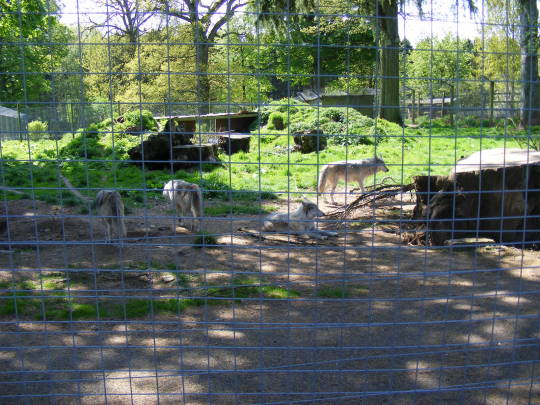
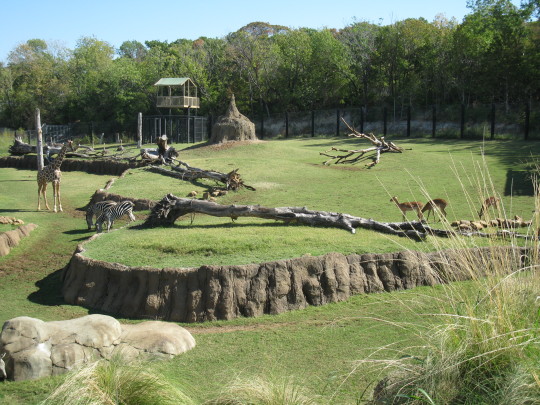
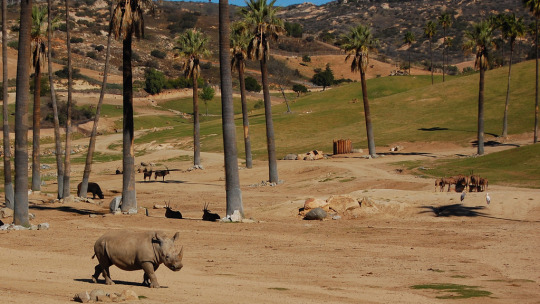
Good zoos do not keep their animals in “tiny spaces” with no enrichment. I’m not pro-roadside zoo. I’m pro-accredited zoo. Zoos are incredibly important for conservation and education.
There should be way more pictures of modern zoos so i just add some more
Seriously zoos do so much important conservation work as well I hate when people shit all over zoos as if the animals are locked up and not looked after
The SF Zoo has two sea lions. Now, if you know SF, you know that sea lions are a Thing. They’re all over Pier 39 and various other beaches in N California. In fact, the zoo is near the ocean, so there are sea lions not 200 yards from the zoo entrance. So having sea lions in the zoo seems sort of superfluous.
Except the sea lions are blind. One was found as an adult after suffering a gun shot wound to the face that destroyed his eyes. The other was found as an adolescent, weak and starving because it had been blinded and unable to hunt. So they were rescued and introduced and the zoo built them a nice pool where they can swim and sunbathe and people toss them fish. It’s not the biggest exhibit, or the fanciest. But it’s a home for them, where they’re safe and well fed. Sea lions aren’t the most romantic of animals, but they’re a part of SF culture and a lot of us have a soft spot for the loud, bulbous things. And because of zoos, these two get to live long, happy lives.
Whenever anyone complains about zoos, I think about Silent Knight and Henry.
I think it’s St. Louis zoo that is saving big cats in Africa. Scientists couldn’t figure out what was killing off the local lion population. They were dying off from Canine Distemper. The local unvaccinated dogs of the towns would spread the disease to other animals or have it themselves. When the lions ate the infected animals they would catch it as well. You know what that Zoo is doing to stop this disease? They are going over to those towns and vaccinating the dogs for free. The community loves it and people from other villages comes for miles to get their dogs vaccinated as well.
They also do work with camel populations because the local human population use the camels for food sources the zoos help monitor the camels health.
Another zoo, I want to say it’s the Oregon zoo but don’t quote me on that, is helping female inmates. The zoo works with the female prisons by encouraging the inmates to assist in the breeding and raising of endangered species of butterflies. They plant the specific plants that the butterflies and catapillars need, raise them, and release them. These inmates get noted in any scientific journals that get published. They are giving these inmates a sense of accomplishment and validation.
Zoos not only save species but bring together and assist communities in an effort to save the environment. Zoos, good zoos, are essential to the future and I will fight anyone who tries to say otherwise.
PS you don’t see PETA doing any of this.
One of the local zoos in my area at one point rescued a bald eagle that had been shot and kept it in the zoo to let it recuperate until they freed it again. Some of the zoos in my state will keep injured animals there until they heal again.
Helsinki Zoo is the world leader in snow leopard and Amur leopard conservation, in their care these endangered species have managed to breed more than anywhere else in captivity and this in turn has enabled the re-introduction of these animals back to their native habitats. https://www.korkeasaari.fi/helsinki-zoo/
I work at a zoo that is instrumental in the California Condor recovery program (among dozens of other conservation projects). We went from 42 surviving individuals left to over 400, over 200 of whom are in the wild. We’re part of the amur leopard species survival plan with two young animals who are eagerly attempting to make babies. We host one of North America’s only bachelor troops of western lowland gorillas, preserving the social structure of wild gorillas. All of our bald eagles are rescues who would not survive in the wild. All our keepers participate in field research and conservation work in addition to a full time team of conservationists. We host the most genetically valuable male Masai giraffe in North America, who has sired 5 offspring with 1 on the way, increasing the genetic diversity of his entire species. If you’re against zoos, you don’t know what zoos do.
Want to be sure a zoo is accredited? Check out the AZA (association of zoos and aquariums) website. They check every zoo at least every 5 years and have standards for everything and anything, including diet, habitat, medical care, enrichment, safety, financial stability, breeding and conservation programs, education, etc. I kid you not, if they find one enclosure that they say isn’t big enough they often pull the accreditation on the spot.






 🔥 There is beauty in destruction🔥