It’s a mysterious, newly discovered disease that strikes mainly young women, and it’s often misdiagnosed. Doctors who discovered it, here in Philadelphia, say it’s like your brain is on fire. 3 On Your Side Health Reporter Stephanie Stahl says it starts with personality changes.
Young women dazed, restrained in hospital beds, acting possessed and then becoming catatonic. They’d been so normal, when suddenly their lives went haywire.
“One minute I’d be sobbing, crying hysterically, and the next minute I’d be laughing, said Susannah Cahalan, of New Jersey.
“I was very paranoid and manic. There was something wrong. I thought trucks were following me,” said Emily Gavigan, of Pennsylvania.
And it got worse for Emily Gavigan, who was a sophomore at the University of Scranton. Hospitalized, and out of it, she couldn’t control her arm movements. Then there were seizures, and she needed a ventilator. Her parents were watching their only child slip away.
“It was life and death for weeks,” said Grace Gavigan, Emily’s mom.
“We were losing her. This is something that I couldn’t control,” said Bill Gavigan, Emily’s dad.
Doctors also couldn’t figure out what was wrong with Susannah.
“I had bizarre abnormal movements, would leave my arms out extended, you know, in front of me. I was a relatively normal person, then the next minute I’m hallucinating and insisting that my father had kidnapped me,” said Susannah.
Turns out, Susannah and Emily weren’t mentally ill. They both had an auto immune disease called Anti-NMDA Receptor Encephalitis, when antibodies attack the brain, causing swelling.
Susannah says this is how doctors explained it to her parents, “He told them her brain is on fire. He used those words: ‘Her brain is on fire.’”
What you are seeing the oldest surviving film in existence. This film is called “Roundhay Garden Scene” and was shot on the single lens motion camera invented by Louis le Prince.
The scene shows Louis’s son Adolphe, Louis’s in-laws, Sarah and Jospeh Whitley, and Annie Hartley walking around the Roundhay garden. Sarah Whitley died 10 days after this scene was filmed.
While many credit Edison with inventing the motion camera Le Prince actually invented one first, though he was never credited with the idea as he permits never went through and were lost.
Louis le Prince disappeared on September 16, 1880 after getting on a train in Dijon, France. His body nor belongings have never been found and many wonder what happened to who some call “the father of cinematography”
@sixpenceee so this is my favorite part of the National Museum of the US Air Force in Dayton. Canada built a flying saucer in the 1950s and it didn’t even work. I love it.
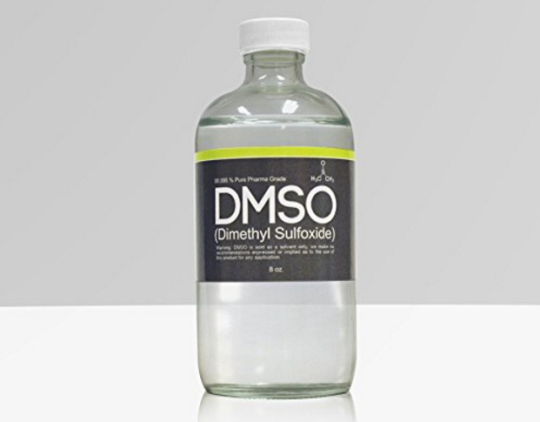
Dimethyl sulfoxide (C2H6OS), also known as DMSO, is a colourless liquid that is commonly used as a reactant and solvent in laboratories and in the chemical industry.
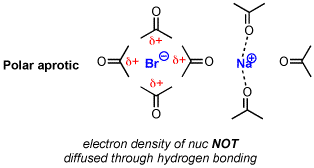
It is classified as a polar aprotic solvent, and is capable of dissolving a range of both polar and non-polar compounds, and even ionic substances as well. Being an aprotic solvent, it cannot form hydrogen bonds with and stabilise nucleophiles, causing their nucleophilicity to be enhanced. As a result, SN2 reactions are preferred in such media over SN1 reactions and elimination reactions. (The photo below shows acetone molecules instead of DMSO, but the logic still applies)
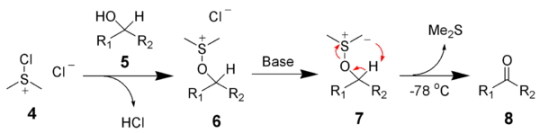
DMSO is also used as a reactant in some reactions, such as Swern oxidation, in which alcohols are oxidised to aldehydes or ketones. However, while this has been an important synthetic technique in the past, its use is now gradually declining due to the production of toxic by-products such as carbon monoxide and dimethyl sulfide.
An interesting property of DMSO is that people have noticed a garlic-like taste in the mouth upon exposure to it!
The curious case of Gloria Ramirez, in which a pungent, garlic-like smell from her body after defibrillation was administered caused 23 hospital staff to collapse, has been attributed by some to her use of DMSO as an alternative remedy for pain. It is postulated that the DMSO was oxidised to dimethyl sulfate, which is highly toxic, upon administration of the electric shocks from the defibrillator, and this resulted in the mass poisoning of nurses and doctors.
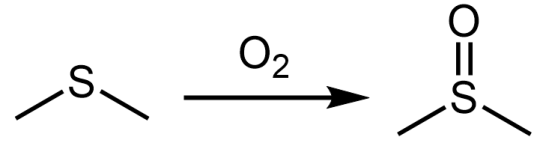
Industrially, dimethyl sulfoxide is produced from the oxidation of dimethyl sulfide with oxygen.
Gloria Ramirez was a housewife from California whose cause of death remains a mystery to this day.
At approximately 8:15 p.m. on the evening of February 19, 1994, Gloria was rushed into ER after affects of her cervical cancer had caused her to have an abnormal heart rate and breathing difficulties. Staff immediately injected her with several drugs: diazepam, midazolam, and lorazepam. This sedated her, but medics noticed that she was not responding to the drugs and her condition was worsening. That’s when a nurse took bloods from her arm and noticed a smell of Ammonia coming from the tube.
The nurse passed the test tube to a doctor who noticed strange particles floating around in the blood. They were “unlike anything” he had ever seen. Furthermore, staff noted that there was a fruity, garlic-like smell coming from her mouth and that her skin was excessively greasy. After this, nurses started fainting and doctors had to leave the room because they felt so ill. Nobody knew what was happening, only that Gloria’s body was emitting a foul-smelling odour that seemed to be making everybody nauseous. The staff evacuated all emergency room patients to the parking lot outside the hospital. Overall, 23 people became ill and 5 were hospitalised.
At 8:50 p.m., Gloria Ramirez was pronounced dead. She had died from kidney failure, but to this day nobody knows what caused her strange condition or if it played a part in her unusual death.
The story is even weirder, and also the ideas of what happened. Some men said that it must have been mass hysteria in the nurses even though one of them is now partly paralyzed in a leg and has problems with her head hurting from time to time.
One of the common ideas is that there was a secret meth lab going on in the building (which apparently was a thing in the area. WTF?) AND THEY PUT IN A THING OF CHEMICALS BY ACCIDENT *insert wordless screaming here*
In Hiroshima, there are permanent shadows caused by the intensity of the blast from the bomb that was dropped. Nuclear bombs emit EM(electromagnetic) radiation which was absorbed by the people or objects that were in front of the radiation. So if they were far enough away from the blast, they wouldn’t have been incinerated, but still would have cast a shadow.
Since thermal radiation is light, and since light travels from a central point, everything in its path is burned except when there is something blocking it, so it creates this shadow effect. The surfaces behind the matter (the objects you see the shadows of) received much less radiation bleaching so there is a visible difference
An ostomy is a surgical creation of an opening in the intestinal wall to the outside of the body. There are a few different types of ostomies and their names depend on the anatomical placement.
Photo cred to Intermountain Healthcare
Usually, the name coincides with the part of the intestine being surgically placed. For example, and ileostomy is created in the ileum part of the intestine.
Who needs an ostomy?
Different types of disorders may call for the placement of an ostomy. Some ostomies are going to be permanent, others may only be temporary. This is usually determined by the provider and severity of the cause. Obstructive disorders such as intestinal tumors may require an ostomy. Diverticulitis, Ulcerative Colitis, and intestinal perforations may also require an ostomy. Most are elective, however in some emergencies, an ostomy may be required.
Pre/Post-Op Nursing
-Obviously for an ostomy procedure, we are going to need informed consent. It is the surgeon’s duty to explain thoroughly to the patient what the procedure is, including risks and benefits. The nurse’s position is to clarify only. The nurse also will help with a bowel prep, if needed, before surgery. So why are we doing a bowel prep? Before most procedures, the patient is given an enema or laxative to clear the bowels. This is to help decrease intestinal bacteria and therefore decreasing the risk of post-op infection. The patient will likely be NPO the night before surgery. Also, they most likely will have IV or oral antibiotics prescribed. If the patient is scheduled to have an NGT insertion, they need to be educated that after the surgery, a tube will be in their nose!!! They WILL try to pull it out if not!
-The patient may have an IV patient-controlled analgesia pump for 24-36 hours after the surgery. Their diet is going to be liquid to solid and advance as tolerated BY the patient. You need to make sure that before they are given ANYTHING, the gag reflex needs to be present. You need to monitor the stoma to make sure it is function and place a pouch as soon as possible.
Stoma Care
So what does a stoma look like? Stomas typically are going to be reddish-pink and moist. If they are dark red, purple, or black, this indicates ischemia and needs to be reported to the provider.
The stoma should start working 2-4 days post-operatively. First there will be a passage of flatus, usually. Depending on the placement of the stoma will also depend on the type of stool you’ll typically see.
Ascending Colon- liquid stools
Transverse Colon- pasty stools
Descending Colon- solid stools
If patients have a stoma in the lower vicinity, they should be informed that some sexual dysfunction may occur.
They should use mild soap to clean the stoma.
Nutrition
Okay, guys! Just a couple notes on nutrition then ostomy care is finito!
So stomas can be stinky. 🙂 No big deal, as a nurse you can tell your patient a couple tips! For example, buttermilk, cranberry juice, and yogurt can reduce odor in a stoma. If the patients are having a lot of gas, you can recommend crackers, toast, and yogurt!!!
Most of this information is taken from the book ‘The Readers Digest Book of Strange Stories and Amazing Facts’ copyright 1975, revised 1976. I apologise for any inaccuracies, please remember this is just for fun.
The first recorded victim of the curse, at least according to legend, was a Hindu priest who fell under its spell 500 years ago soon after it was mined. He stole it from the forehead of an Indian temple idol but he was caught and put to death by torture.The diamond turned up in Europe in 1642 in the hands of French trader-smuggler Jean Baptiste Tavernier.He made enough money from selling it to buy himself a title and an estate. Then his son got so badly into debt through gambling that Tavernier was forced to sell everything he owned. Bankrupt, he headed back to India to remake his fortune, only to be torn apart by a pack of wild dogs. (Though this is disputed and some believe the official story that he lived to the age of 84 and died of natural causes but where’s the story in that?)The gem reappeared in the possession of the French King Louis XIV, The Sun King.He had the diamond cut from it’s original 112.5 carats down to 67.5 carats.
“Eagle’s Nest Sinkhole (also known as the “Lost Sink”) near St. Petersburg, Florida has been called the Mount Everest of diving. From ground level, it appears to be nothing more than a pond, but narrow shafts at the bottom of the pond lead into a much larger underwater cave system with over 2 kilometers (1 mi) of charted passages, rooms larger than a football field, and shafts no wider than a doorway. The cave’s deepest point is 94 meters (310 ft) below the surface.
The comparison to Mount Everest is due to its remoteness, difficulty, and spectacular beauty. It’s also an incredibly dangerous dive site. Like the Samaesan Hole, the depth of Eagle’s Nest Sinkhole is such that Trimix certification is recommended. The use of only regular air can lead to disorientation below 46 meters (150 ft). Cave diving certification, previous cave diving experience, and diving with a guide familiar with the area are also highly recommended. Guidelines are used for divers to find their way back to the surface.
Even with experience and equipment, veteran divers have died in Eagle’s Nest. Some have simply blacked out; others have become tangled in their own guidelines, eventually running out of air. The site’s remoteness also means that help is not close, and only other cave divers are qualified to attempt a rescue. In 1999, Eagle’s Nest was closed due to the deaths, but it was reopened in 2003. A day pass for diving costs $3.”




 🔥 There is beauty in destruction🔥